Transform your portrait from good to extraordinary with the power of stellar reference photos.
I acknowledge the challenges in obtaining an ideal photo, particularly when dealing with a memorialized pet or a surprise gift portrait. Yet, having access to photos adhering to the specified guidelines or the ability to capture suitable images can make a significant difference, distinguishing between a satisfactory painting and an exceptional one. Following these recommendations is pivotal in elevating the overall quality of the artwork, leaving a lasting impact on the final result.
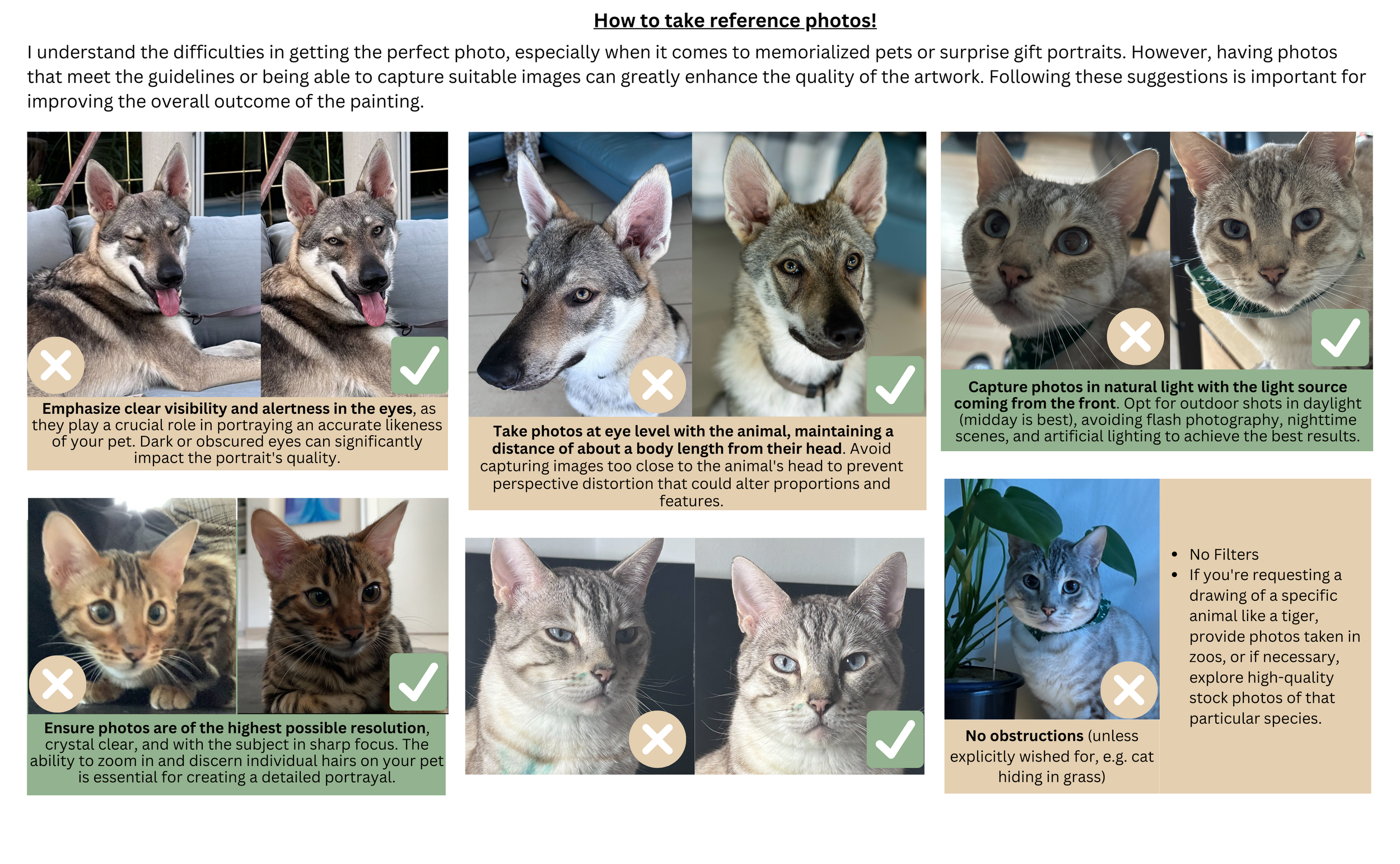
1. Ensure photos are of the highest possible resolution, crystal clear, and with the subject in sharp focus. The ability to zoom in and discern individual hairs on your pet is essential for creating a detailed portrayal.
4. Take photos at eye level with the animal, maintaining a distance of about a body length from their head. Avoid capturing images too close to the animal's head to prevent perspective distortion that could alter proportions and features.
2. Capture photos in natural light with the light source coming from the front. Opt for outdoor shots in daylight (midday is best), avoiding flash photography, nighttime scenes, and artificial lighting to achieve the best results.
5. If you're requesting a drawing of a specific animal like a tiger, provide photos taken in zoos, or if necessary, explore high-quality stock photos of that particular species. It can be the same animal seen in a zoo has often photos taken of them and can be found online. In cases where stock photos are deemed suitable, it is the client's responsibility to purchase them before proceeding.
3. Emphasize clear visibility and alertness in the eyes, as they play a crucial role in portraying an accurate likeness of your pet. Dark or obscured eyes can significantly impact the portrait's quality.
6. No obstructions (unless explicitly wished for, e.g. cat hiding in grass)
7. No filters! I will filter them if necessary during the drawing process to assisst with contrast.

-
1. Ensure photos are of the highest possible resolution, crystal clear, and with the subject in sharp focus. The ability to zoom in and discern individual hairs on your pet is essential for creating a detailed portrayal.
-
2. Capture photos in natural light with the light source coming from the front. Opt for outdoor shots in daylight (midday is best), avoiding flash photography, nighttime scenes, and artificial lighting to achieve the best results.
-
3. Emphasize clear visibility and alertness in the eyes, as they play a crucial role in portraying an accurate likeness of your pet. Dark or obscured eyes can significantly impact the portrait's quality.
-
4. Take photos at eye level with the animal, maintaining a distance of about a body length from their head. Avoid capturing images too close to the animal's head to prevent perspective distortion that could alter proportions and features.
-
5. If you're requesting a drawing of a specific animal like a tiger, provide photos taken in zoos, or if necessary, explore high-quality stock photos of that particular species. It can be the same animal seen in a zoo has often photos taken of them and can be found online. In cases where stock photos are deemed suitable, it is the client's responsibility to purchase them before proceeding.
-
6. No obstructions (unless explicitly wished for, e.g. cat hiding in grass)
-
7. No filters! I will filter them if necessary during the drawing process to assisst with contrast.